Stain only
Drywall feels hard and dry; only the paint is discolored. Seal the stain with a stain-blocking primer, then retexture and paint. No cutting.
Water stains
Water-damaged drywall repair in Shiloh starts once the source of the water has been repaired. A ring on the ceiling, bubbled paint or a soft spot in a wall is the visible part; the repair depends on how wet the board got, how long it stayed wet and whether it has started to sag.
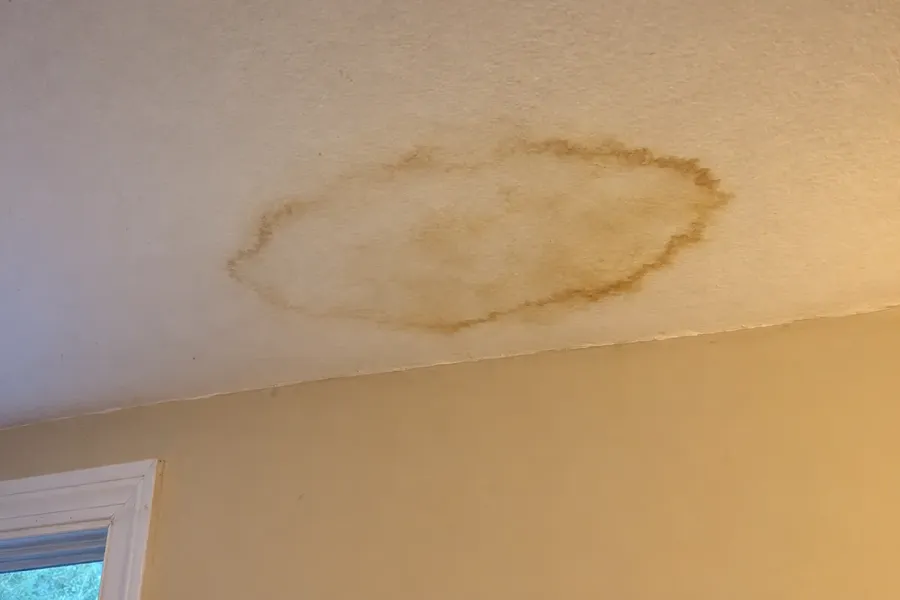
Stop the source before anything else. A stain that is still damp, soft to the touch or slowly growing means water is still arriving. Roof leaks, bathroom supply lines, toilet wax rings, tub and shower drains and air conditioning condensate lines are the usual causes in a two-story house. A drywall repair done over an active leak fails, and it hides the problem.
With the water stopped, the drywall still has to dry out. A moisture meter tells whether the drywall and framing behind it are dry enough to work on.
How the board looks and feels decides the repair.
Drywall feels hard and dry; only the paint is discolored. Seal the stain with a stain-blocking primer, then retexture and paint. No cutting.
Paper face loose, compound swollen, board soft under a finger. Cut the wet section back to firm board, replace it, tape, texture and prime.
Ceiling board bowed down between joists. Remove the sagging section to framing and hang new board. Sagging board does not go back up.
In the Metro East, April and May are the wettest months on the calendar, each averaging about five inches of precipitation at the Belleville station, and that is the season when roof and window leaks most often stain ceilings. Summer brings the other common source: air conditioning condensate lines and drain pans in attics or closets that overflow and stain the ceiling below. Winter adds ice dams on some roofs and frozen supply lines in exterior walls, as December through February average lows below freezing.
July averages a high of about 90°F at the same station, which keeps air conditioners running and their drain lines busy through the summer.
Drywall that stays wet for more than a day or two can grow mold on the back face, where it is not visible. If a cut-out shows mold on the framing or insulation, that area is cleaned or replaced before the replacement drywall is hung. Insulation that got soaked is replaced too, because soggy insulation keeps the studs damp.
Fixr's national cost guide lists roughly $400 to $800 for fixing water-damaged drywall when the damage is confined to one room. The area that has to be replaced, ceiling height, whether insulation or framing also needs attention, and the texture to match are what move the price. The price here is set on site after the damage is measured.
Not with ordinary paint. The stain bleeds through. Sealing it with a stain-blocking primer comes first, and then the ceiling can be painted to match.
Rarely. Only the soft or sagging part is removed, out to the closest joists. The rest is left in place.
Coverage is decided by your insurer and the cause of the water. Photos of the damage before the repair help with any claim.
A drywall contractor who works around Shiloh looks at the wall and prices it with you before anything is cut.
Call 7 days, 7am–9pm